Friday, September 17, 2010
Challenge yourself
When I first wrote about change back in January, I couldn't imagine the path that would lead me to where I am today, just two days away from a planned 9 week yoga retreat and teacher training seminar in California.
I first became interested in yoga as a way to heal myself because all those years of gardening had taken a toll on my body. My back was strained and my knees were sore. As it turns out, I like practicing yoga as much as I enjoy gardening. So I've decided to take a journey down the yoga path to see where it leads. Although this journey is certain to be physically, intellectually and emotionally challenging, I believe that it will create unimaginable opportunities for self realization and growth. I am a firm believer in challenging yourself. Once again, I am shifting the grain of sand to see what changes lie beyond the dune. Although I am both excited and terrified, this promises to be a very interesting journey. So, I am taking a break from the blog. I have left the garden in the very capable hands of my husband Larry and I'll see you on the internet when I return in November. In the meantime, enjoy the fall and eat good food.
Peace.
Thursday, September 16, 2010
Finished compost
Like magic, the pile of grass, leaves, manure, and garden debris that I created in the spring has transformed into dark, crumbly compost! I was careful this time to keep the pile small (about 6 x 10 feet and no taller than 4 feet high) and I was diligent about layering the ingredients. I also added biodynamic compost starter, a mixture of herbs and bacteria which helped to stimulate the proliferation of beneficial soil organisms and enzymes. The best part of this compost is that I never once had to turn the pile. I have two additional piles cooking and will create another using all of the garden debris from the fall cleanup. I will use this compost to spread on the garden, rich food for the worms and for next year's crops.
Broccoli and cauliflower
I planted the broccoli and cauliflower last month and they have taken off the past two weeks. The buds of the broccoli have formed, but it will take a few weeks more before the heads are large enough to harvest.
Wednesday, September 15, 2010
Lots of red!
Outside temperatures may have cooled, but inside the garden the colors are red hot! For the first time ever, I left the peppers on the vine long enough for them to turn red which makes them taste even sweeter! Tonight I'm going to make a red pepper pesto from a recipe that I heard on the Today show.
Red Pepper Pesto
Ingredients:
Several medium sized red peppers, or two large
2 cloves garlic
2 or 3 leeks or onions
Olive oil, about 1/4 cup
Handful of nuts (walnuts, almonds)
Parmesan cheese, about 1/4 cup
Salt and pepper, to taste
Directions:
Chop garlic in the bowl of a food processor. Cut the peppers, remove the seeds, and slice into strips. Chop the leeks or onions. Saute the peppers and the onions or leeks in olive oil until just cooked through, but not too mushy.
Add the pepper and onion mixture to the bowl of the processor and pulse several times until mixed. Add the nuts and pulse again. Add the parmesan cheese and salt and pepper and pulse again briefly to incorporate all the ingredients. Be careful not to over mix! Serve with crackers. This is also great served with grilled chicken.
As you can see, we are inundated with tomatoes. I probably closed the garage farm stand prematurely, but I needed the time to prepare for my trip out to California (more on that later.) Anyhow, we are making tomato sauce almost every night and putting it all in the freezer next to the ratatouille, caponata, and basil pesto that is already in there. Cooking this winter is going to be a lot more fun knowing that I have the taste of summer stored in there.
As promised, the cooler temperatures have made the flower colors more intense. The zinnias have never looked better and I've been cutting armfuls of them every day to bring into the house. There is no time to waste because in a few short weeks we'll have our first frost and the flowers will be gone.
Monday, September 13, 2010
Winter squash
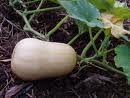
Just when I think I can not eat another serving of ratatouille, the butternut squash looks like it may soon be ready to pick. I planted Waltham Butternut, a popular variety that has yellow skin, an orange fleshy pulp and a sweet nutty flavor. In order to grow winter squash you need the usual rich, well drained soil and plenty of water, but also lots of room for the long vines and large leaves to ramble. You also need patience as it takes a long time for the squash to grow and mature. Butternut squash can be harvested any time that the color has gone from light green to a pale, soft yellow, but it should be picked before frost. Butternut squash makes a nice soup, but I prefer to peel and chop it and roast it in the oven with a little olive oil, butter, salt, pepper, and a little brown sugar to taste.
Monday, September 6, 2010
Lettuce likes it cool
The end of summer means cool weather crops like lettuce are happy again. It's going to be a great couple of weeks for salads! This variety is called 'ermosa' which means beautiful, and indeed it is!
Saturday, September 4, 2010
Sweet taste of summer
The hardest part of growing watermellons is knowing when they are ready to pick. There is no real science to it, but over the years growers have come up with some common methods that include checking the tendril nearest to the fruit to see that it has turned from green to brown; turning the melon upside down to see if the bottom has turned yellow where it touches the ground; and rapping it lightly to hear a 'thunk' rather than a 'ping.' For me, the only way I could really tell was to pick one and cut it in half. It was a good guess as the inside was pink, juicy, and perfectly ripe! Now I'm going to celebrate my good fortune by eating it for breakfast!
Friday, September 3, 2010
Circus seal
I planted this topiary form back in May. It is a seal balancing a ball on it's nose and it is the healthiest of a group of several animal forms that I attempted to nurture through the summer. It wasn't easy keeping the topiaries hydrated during this very hot and dry summer. They had to watered, sometimes twice a day, and also needed regular haircuts and grooming. But once covered, they are fun to look at and are different than the usual pot of geraniums. The base of the seal is covered with a perennial vine called 'creeping jenny' and the top with a creeping thyme. Any plant that vines and grows quickly is good to use. Ivys and myrtles are particularly good choices. Topiaries are tricky and need some maintenance, but they are a good choice if you are looking to try something different and fun.
Thursday, September 2, 2010
No tears!

Leeks, or gourmet onions, belong to the Lily family and are closely related to onions, garlic, scallions, shallots, and chives. Leeks produce long edible stems rather than large bulbs. I've been harvesting leeks since the beginning of August and I use them instead of onions in many recipes. Cooking with leeks is a pleasure. For one thing, they don't make you cry when you cut them, and when cooked, leeks have a creamy texture and sweet taste. As only the white and pale green parts of the stalk are used, it is advisable to build up the soil around the base of the plant a few times during the growing season to keep as much of the bottom part of the stalk away from the sunlight. This encourages 'blanching' which makes for a nice long white edible stalk. My leeks are on the thin side, but I think that has more to do with the variety than anything else. I can harvest leeks as I need them and if there are still leeks in the garden in October, they will survive a light frost. But, I think they'll be gone by then.
Random act of gardening kindness
These are just some of the vegetables that were harvested from my neighbor Jennifer's garden. Her garden was exploding with produce and she was going to be away in Europe with her children and unable to harvest any of it. In fact, her garden, although quite impressive, had become overwhelming to the point where she couldn't even go near it. As a fellow gardener, I could not stand to see all those beautiful, ripe vegetables going to waste so I gathered a small group of fellow gardeners and we headed around the block to her house to harvest what we could and clean up a few overgrown planting beds. We collected baskets and bags full of beautiful produce and donated it all to the outreach center at St. Patrick's church where it was immediately distributed to a very thankful and appreciative group of people. Jennifer planted way more than she and her family could eat and I'm certain that next year she will do it again. I can relate.
Wednesday, September 1, 2010
Visit the farmer's market
Even though Labor Day is upon us, there is still time to take advantage of local, fresh, and organic produce here on Long Island. There are farmer's markets, dozens of farm stands, mostly on the East end, and CSA's that deliver to multiple sites around the island. Farmer's markets offer a lot more than fresh produce, including local eggs, artisinal cheeses, honey, baked goods, organic meat, homemade jams and preserves, fruit, cider, and flowers. There is nothing I like to do more than visit a farmer's market on a saturday morning. I love that I can meet the farmers and artisans, taste the food, and ask questions about where the vegetables were grown or how the cheese was made. Call me crazy but I get excited about a wheel of goat cheese in much the same way that other people feel about a new pair of shoes! The following Suffolk County farmer's markets are open through mid November:
Hauppage
Huntington
Islip
Patchogue
Port Jefferson
Riverhead
Sag Harbor
Westhampton Beach
Here's to happy shopping and healthy eating!
Tuesday, August 31, 2010
Basil and basil pesto
There is nothing that says summer more than a plate of sliced tomatoes topped with fresh green basil. I can't think of another herb that packs so much flavor into its leaves. When I'm out in the garden, I'll pick large bunches of basil just so I can bury my nose in it and inhale the fresh scent. I keep a bunch of it in a glass on the windowsill above the kitchen sink and add it to just about all my summer recipes. This is the time of year that basil works mightily to put up flowers and go to seed. Rather than struggling to cut the white flower stalks each day, I've decided to pull the plants and make pesto to freeze for the winter. Basil pesto is easy to make and freezes well and it will remind me of summer long after the garden has been put to bed.
Basil Pesto
2 cups of basil leaves
1/2 cup pgrated parmesan cheese
1/2 cup olive oil
1/3 cup nuts (pignoli, walnuts, almonds)
2-3 cloves garlic
salt and pepper
Chop garlic in the bowl of a food processor. Add the basil leaves and chop. Add the olive oil in a steady stream until incorporated. Add the nuts and then the cheese. Add salt and pepper to taste at the end. You can adjust the amounts according to taste.
Monday, August 30, 2010
Escarole
Escarole is a variety of endive whose leaves are broader, paler, and less bitter than other members of the endive family. The most desirable part of the escarole is the center where the paler leaves are less bitter than the rest of the head. I was able to cultivate the pale center leaves by putting rubber bands around the heads depriving the center leaves of sunlight. Generally, escarole is tougher than lettuce and more bitter. However, the paler, inner leaves of escarole can be torn into salads for a taste very similar to raddicchio. I prefer to cook it. Last week I made an escarole and white bean dish. I sauteed garlic, onions, celery, and carrots until tender. I added torn escarole leaves to the pan and then added chicken broth to cover. I added one can of white beans and cooked everything for a few more minutes until done. I put half of it in the freezer and ate the rest for lunch. Escarole is high in fiber, folic acid and vitamins A and K. I have several more heads of escarole in the garden that I will try to pick this week and make into something that I can freeze for later this fall.
Saturday, August 28, 2010
Blooming color
It has been a bit of a difficult year for dahlias. The lack of rain has stressed the plants, yet the daily wet on the leaves from the irrigation system has caused the leaves to mildew. Deep soaking rains are ideal, at least an inch per week, rather than the daily 20-40 minute rinse they have been getting from the sprinklers. Despite, the unfavorable conditions, the dahlias are still putting up some pretty spectacular blooms. The best news is that they only get better from now to the end of the season. As the temperatures drop, the flower colors will become more intense. Something to look forward to as the rest of the garden begins to wind down.
Fennel
I like growing fennel. The light green fern- like leaves have an ethereal look that contrast nicely with the other textures and colors in the garden. Rather than hiding underneath the soil, the bulbs grow right on top where I can watch them get larger each day. Fennel, as it turns out, has been around for centuries and has been used as food, medicine, herb, and even insect repellent. Fennel was planted in the temple gardens of Greece and the Greeks wore crowns of the feathery leaves in their celebrations to worship the gods and godesses. Today, fennel is commonly used as seasoning (think fennel seeds in sausage,) but it is also used as a breath freshener and digestive aid. I know vegetarians who chew fennel seeds to help combat gas! Fennel is low in calories and high in vitamin A, calcium, potassium, and iron.
When raw, fennel smells a lot like licorice, but cooking fennel makes it sweet. Fennel is adaptable in the kitchen as it can be eaten raw or cooked, eaten alone or as an ingredient in many recipes. Fennel can be steamed, sauteed, or baked. It is a nice compliment to fish. Try using the leaves as an herb instead of dill. You can add sliced fennel to onions as a base for tomato sauce. Finely chopped fennel stalk is a nice addition to egg salad. You can try fennel orange muffins. Well, you get the idea! I sell fennel bulbs at the garage farm stand, but most people don't know what it is or how to use it. To be honest, I didn't know much about fennel before I started growing it a couple of years ago. As often happens, I tried it and found I like it and have been growing it ever since.
Thursday, August 26, 2010
Elephant ears
Remember those huge bulbs that I planted in pots last spring? It took some time, but they are finally doing their thing. Elephant ears, as they are commonly called, are members of the caladium family. They are tropical plants that prefer sunshine, heat, and humidity to grow well. That was certainly no problem this summer. However, they can also be grown in the shade. In the ground, elephant ears can grow as tall as 5 feet, but because I am growing mine in pots, the plants will be shorter. Each ear emerges from the soil as thin as a pencil and then slowly unfurls like a sail. I have three pots grouped together which makes for a dramatic display on the steps outside the family room door. Caladiums will not survive the winter so after the first frost, I will dig up the bulbs and store them in a cool, dark place until next season when I will plant them again.
Tuesday, August 24, 2010
Life is a bowl of cherries
Tomatoes, that is. I keep a big bowl of these cherry tomatoes on the kitchen table to snack on during the day. The tomatoes are coming in strong and I have to make sure to pick them every day because if left on the vine too long, the tomatoes will crack. Of course, I planted way more than we can eat so I've been selling nice sized bags of mixed varieties for a couple of weeks now. I like to mix the colors up to challenge people to try the different kinds. My personal favorite is called Black Prince, a small to medium size tomato that is an unusual mahogany brown color with a distinctively rich fruity tomato flavor. It is the one I choose for my salads and sandwiches every time. I make sure to include one in every bag I sell.
Black Prince
Monday, August 23, 2010
The garage door is open!
Many of my friends and neighbors know by now that I have created a small enterprise in my back yard, selling vegetables and flowers out of the garden. They know that when the garage door is open, they can come in and buy whatever is available on the table inside. I pick and rinse the produce, put it in plastic bags, price it, and leave an envelope on the table for cash. I usually send out an email on the days that I pick to alert people that there are fresh veggies for sale. Everything is sold on a first come, first serve basis. I have several regular customers as well as those who occasionally stop by on their walk around the neighborhood. Most weeks I sell just about everything. The best part of my garage farm stand is that there are no set hours, no marketing costs, no personel issues. No pressure. I sell what I have on the days that I work in the garden. When the garage door is shut, the market is closed. Today was busy at the garage market. Every time I looked out the window, there was another car in the driveway and it looks like I'm just about out of tomatoes.
Some days I think that I ought to spruce up the entrance to the market and paint the garage door, but it has been nice flying under the radar and I don't want to bring unwanted attention to the good thing that I've created. And what color would I paint it anyhow? Any ideas??
Sunday, August 22, 2010
Eggrageous!
By now most of you have heard about the huge egg recall that is going on in the U.S. So far, 1300 people have been sickened by Salmonella prompting the recall of more than half a billion eggs. The infected eggs are virtually impossible to track as many of them were packaged as long ago as April and distributed far and wide across multiple states. April? Are you kidding? It is now the end of August. I had heard that grocery store eggs were old, but I had no idea they could be 4 months old or older! Luckily for me I have found a good local source for eggs. The eggs that I pick up from my friend Roxann are just hours or a couple of days old at most. They are a nice light brown color and the yolks are a deep orange. They taste fresh and delicious. I have been selling Roxann's eggs as fast as her hens can lay them out of my garage all summer. It is a little secret I share with my friends and neighbors.
Ratatouille
Everything you see here is from the garden! Onions, garlic, peppers, eggplant, zucchini, yellow squash, tomatoes, and basil. Mixed with olive oil and salt and pepper, and baked in the oven, it makes a great summer meal.
Subscribe to:
Posts (Atom)